

Sugar substitutes – harmful or healthy? Which sweetener is safe | Verde

1+1=3 на батончики та цукерки 🎁

Sweeteners: Harmful or Useful? Which Product is Safe

Today, sugar is considered one of the main “dietary challenges” for health. The World Health Organization emphasizes that excessive consumption of free sugars is associated with an increased risk of obesity, type 2 diabetes, and cardiovascular diseases (WHO, 2015). Unsurprisingly, more and more people are asking the question: sugar substitute – harm or benefit?

To answer, we need to understand what sugar substitutes are, how they work, and what modern science says.

What are sugar substitutes

Definition and types

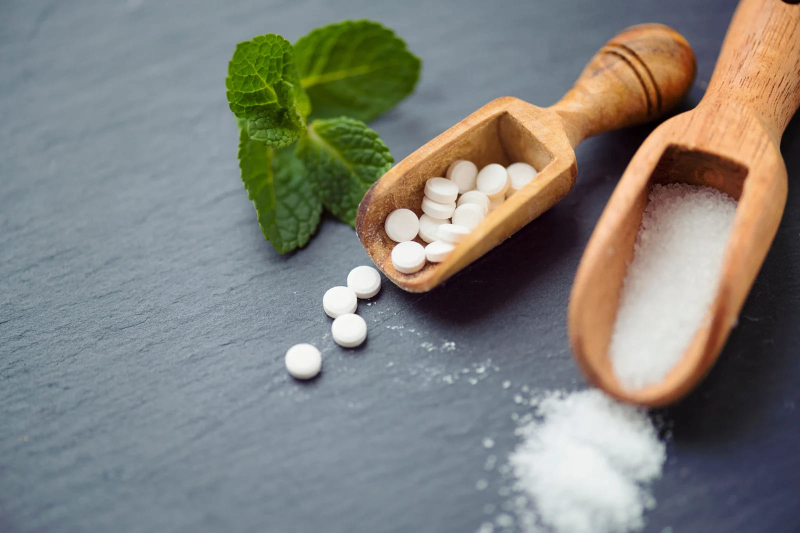
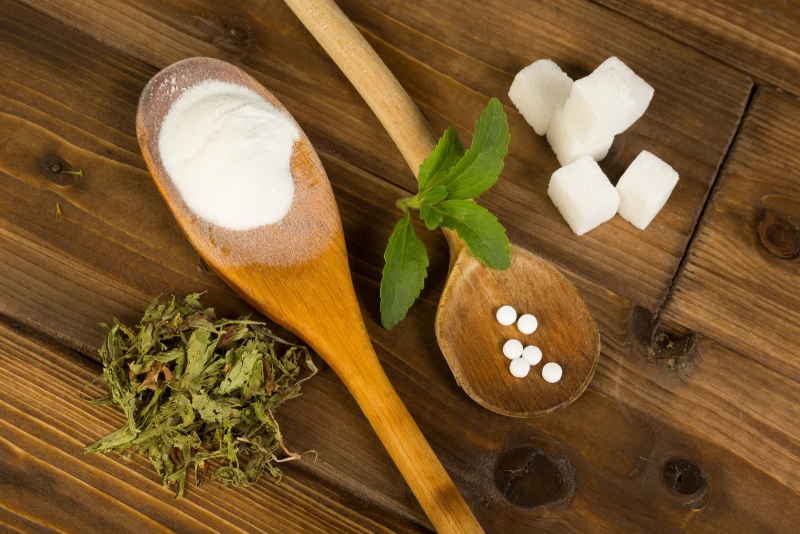
Sugar substitutes (sweeteners) are substances that provide a sweet taste with lower or zero calories. They are divided into:

  • natural (stevia, erythritol, xylitol, maltitol);
  • synthetic (aspartame, sucralose, acesulfame K, saccharin).

The European Food Safety Authority (EFSA) and the FDA (USA) have approved acceptable daily intake (ADI) levels for most sweeteners, which are considered safe when consumed within these limits (EFSA, 2010; FDA, 2022).

How they affect the body

The mechanism depends on the type:

  • sugar alcohols (erythritol, xylitol, maltitol) are partially absorbed and may have a mild laxative effect;
  • steviosides (stevia) are metabolized in the intestine and excreted;
  • synthetic sweeteners (aspartame, sucralose) have different breakdown pathways but generally do not raise blood glucose levels.

Meta-analyses show that regular consumption of sweeteners helps reduce caloric intake and control body weight. However, the question “sugar substitute – benefit or harm” requires an individual approach.

The most popular sugar substitutes and their features

Stevia

200–300 times sweeter than sugar, with virtually zero calories.

Pros: In 2010, EFSA confirmed the safety of steviol glycosides within ADI (4 mg/kg body weight per day) (EFSA, 2010). Some studies suggest antioxidant properties and blood pressure reduction.

Cons: may have a bitter aftertaste at high doses.

Personal opinion of a sports nutritionist: stevia is a good choice for people with diabetes and those aiming to reduce calorie intake. This is one of the rare cases where the question “is a sugar substitute beneficial” is supported by clinical research.

Erythritol

A natural sugar alcohol, almost calorie-free.

Pros: does not raise glucose or insulin, does not cause tooth decay. Studies show good tolerance even in relatively high doses.

Cons: large amounts (over 30 g) may cause bloating.

Xylitol

Energy value – 2.4 kcal/g.

Pros: has an anti-cariogenic effect, confirmed by multiple studies.

Cons: excessive consumption causes diarrhea; toxic to dogs.

Aspartame

A synthetic sweetener, 200 times sweeter than sugar.

Pros: In 2013, EFSA confirmed its safety when consumed up to 40 mg/kg body weight per day (EFSA, 2013).

Cons: contraindicated in phenylketonuria; may trigger headaches in sensitive individuals.

Sucralose

600 times sweeter than sugar, heat-stable.

Pros: suitable for baking, does not affect glycemia.

Cons: a review in Frontiers in Nutrition (2020) suggests a possible impact on gut microbiome with regular use.

Benefits and risks of consumption

Potential benefits

  • weight control (reduced calorie intake);
  • prevention of type 2 diabetes (BMJ, 2019);
  • reduced risk of tooth decay (xylitol, erythritol);
  • safe use in diabetic diets.

Possible risks

  • individual intolerance (bloating, diarrhea, headache);
  • changes in gut microbiome (sucralose, saccharin) (Cell, 2014);
  • increased craving for sweets due to constant receptor stimulation.

Thus, when assessing the harm of sugar substitutes, the focus should not be on toxicity, but on moderation and context.

How to choose a safe sweetener

Reading the label

Check if there are unnecessary additives that reduce potential benefits.

What to look for

  • presence of ADI labeling;
  • preference for natural options (stevia, erythritol);
  • absence of artificial colors and flavors.

My recommendation

I recommend using erythritol and stevia for daily use. They are the most researched, safe, and suitable for people with diabetes. Synthetic options (aspartame, sucralose) are acceptable but should be minimized.

Conclusions

Sugar substitutes are not a “magic solution.” They help reduce calorie intake and manage glucose, but balance in nutrition remains the key.

The example of the VERDE brand shows how modern products can combine taste and health: the company creates desserts without added sugar, using natural sweeteners. This illustrates the “less harm – more benefit” approach, but even such products should be consumed in moderation.

Frequently Asked Questions (FAQ)

Can children use them?

Small amounts of natural options (stevia, erythritol, maltitol) are possible, but it’s better to limit intake and consult a doctor.

Do they cause addiction?

No direct addiction, but they may reinforce the habit of sweet taste.

Are they suitable for diabetes?

Yes, most (stevia, erythritol, sucralose) are recommended by professional dietetic associations (American Diabetes Association, 2022).

Can they be used in baking?

Yes, but not all. Sucralose and erythritol withstand heat well, whereas aspartame breaks down at high temperatures.

Sweet taste is part of life; it should not be excluded. Choose wisely.

Sincerely, article author – K. Kravets, MSc in Sports Nutrition, PhD student in biomedical sciences.

Author of the article:

Kateryna Kravets

Author of the article

Kateryna Kravets is an MSc in Dietetics, a postgraduate researcher in biomedical sciences, and a specialist who has been helping women find comfort in their bodies for over eight years. Her approach is rooted in science, practice, and respect for people — without miracle detoxes or strict diets.

Kateryna Kravets — a nutritionist who believes in balance, not restrictions

Hello. My name is Kateryna Kravets. I hold a master’s degree in dietetics, I’m a PhD student in biomedical sciences, and a specialist who has been helping women find comfort in their bodies for over eight years — without extremes. For me, nutrition is not about counting every crumb, but about understanding what your body truly needs right now. The better we listen to our body’s signals, the easier it is to maintain steady energy, sleep, and mood.

My approach is simple. No magical detoxes or promises of losing five kilos in a week. There’s science, practice, and respect for the person. I help people build balanced eating habits step by step, so the results last — not disappear after another strict diet. In my work, I combine knowledge of nutrition, eating behavior psychology, and gentle coaching. No judgment, but with a clear plan.

I teach to look beyond the rule “eat from 6 to 6.” Why stress makes you crave sweets. How hormones affect appetite. Why uncontrolled restrictions almost always lead to breakdowns. It’s important not only to build a balanced plate but also to understand the context of your life — work, family, deadlines, commuting between meetings. The system has to fit reality, not just look good in a planner app.

On the V-Verde blog — food that works for you

On the V-Verde platform, I share thoughtful materials about healthy eating without cults or fears. I explain how to plan balanced weekly menus that are both tasty and filling. I show where marketing disguises itself as “health advice” and how to tell trendy nonsense from truly useful recommendations. We talk about proteins, fats, carbs, micronutrients, and routines — but always through the lens of everyday life. No “perfect plates” that you could never recreate at home.

It’s important to me that each article gives not just information but tools. You finish reading — and already know what to change for breakfast tomorrow, how to reduce evening overeating, how to plan snacks on the go. Small steps build habits, and habits create results. That’s what sustainable weight loss and genuine well-being look like.

I believe in care without fanaticism — in honest portions, diverse foods, the pleasure of eating, and respect for personal boundaries. If this blog helps you take one more calm step toward better health, it means V-Verde and I are moving in the right direction. Thank you for reading and trusting. Ahead lies more practical, down-to-earth, and truly useful content — the kind that works in real life.

Sincerely, article author – K. Kravets, MSc in Sports Nutrition, PhD student in biomedical sciences.

We use Cookies files to improve the website
Accept
Add items to cart to receive a gift
Add to 1600 uah and get delivery for free
You received the maximum order gift
  • Free shipping

    1600 uah
  • Цукерки Натхнення Японії – Мікс 24 шт as a gift

    1900 uah
  • Showbox of bars – Zaryadys MIX as a gift

    2900 uah
successfully added to your cats
Go to cart
Your Basket